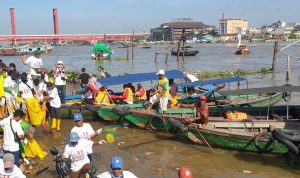
Previously, environmental activists from a number of organizations in Palembang City also tried to clean the Musi River to prevent pollution in the river from getting worse.
Mulyana Santa, an activist with the Spora Institute, said the plastic waste found polluting the Musi River was left over from the activities of people, ships and industries operating along the river basin.
Read Also: PI Provides 375,492 Tons of Subsidized Fertilizer for Eastern Indonesia
Baca Juga:Member BLACKPINK Bawakan Penampilan Terbaik Solonya di COACHELLA 2023Kasus Kematian Pertama Dari Virus Influenza A (H3N8) Datang Dari Cina
The types of plastic waste dumped in the river include plastic bags, cups, bottles, pipettes, food wrappers, and detergents.
The large amount of plastic waste dumped into the Musi River is due to the low awareness of the community to dispose of waste in designated places and a low understanding of the adverse effects of dumping waste into the river.
The lack of facilities and a good waste transportation system causes people to take dangerous shortcuts, namely throwing garbage into the Musi River.
To overcome the plastic waste problem, the Palembang City Government needs to provide information and environmental education to the community.
“It is also necessary to add adequate trash facilities and a good system to regulate people so that they do not litter into the river,” said the environmental activist.
Meanwhile, activist from the Telapak South Sumatra Association, Hariansyah Usman, suggested that the local and central government be more assertive in imposing sanctions on industries that pollute the Musi River.
Companies whose products are packaged with plastic, must also take responsibility for the waste they produce, in accordance with the mandate of Law No.18 of 2008 concerning Waste Management.
Baca Juga:Ireland Rock Band ‘The Script’ Guitarist, Mark Sheehan, Died at Age 46Jelang Idul Adha, Juru Sembelih Dilatih Manajemen Kurban
With this law, said the environmental activist, the Palembang City and South Sumatra Provincial Governments can actually encourage producers to participate in providing waste processing facilities so that it is not only the community that is blamed for the waste problem.