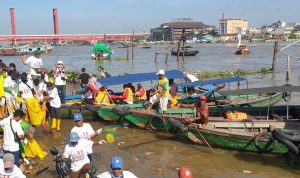
JABAR EKSPRES – The Expedition Sungai Nusantara (ESN) team together with the Telapak South Sumatra association and Spora Institut Palembang found indications of worsening pollution in the Musi River.
This indication is also supported by the fact that it is increasingly difficult to find fish in the Musi River, such as banana baung, kapiat, catfish, tapah, and belida.
The joint team also found the surface of the Musi River inundated with single-use plastic waste.
Baca Juga:Member BLACKPINK Bawakan Penampilan Terbaik Solonya di COACHELLA 2023Kasus Kematian Pertama Dari Virus Influenza A (H3N8) Datang Dari Cina
The team also received complaints from fishermen and fishmongers about the decline in the number of fish caught and the smaller size of the fish.
The team’s researcher Prigi Arisandi explained that based on the results of the Musi River search in mid-July 2022, together with local environmental activists, they were concerned about the pollution of the river.
Moreover, the Musi River water becomes the estuary of dozens of tributaries in the province with 17 regencies and cities.
The high level of land use change activities upstream, unlicensed mining, palm oil plantations, industrial pollution, plastic waste, and wastewater from various community activities have caused pollution in the Musi River to become increasingly severe.
Read Also: Southeast Sulawesi BKSDA Releases Monkey Endemic to Buton Island
The alarming condition of the Musi River needs the joint attention of all parties and citizens so that the river can still be a source of living water for the community, a place to live and breed various types of fish, and other river biota.
The Musi River needs to be kept clean so that it can still be used by people along the river basin to meet their daily needs and as raw material for drinking water.
Baca Juga:Ireland Rock Band ‘The Script’ Guitarist, Mark Sheehan, Died at Age 46Jelang Idul Adha, Juru Sembelih Dilatih Manajemen Kurban
Telapak South Sumatra Coordinator Hariansyah Usman explained that in addition to wastewater from various community activities, industry, plantations, and others, microplastic pollution is a new threat to the sustainability of fish and the Musi River.