JABAR EKSPRES – The Plantation Service of East Kalimantan invites farmers to avoid the use of pesticides and start applying natural plant pest control.
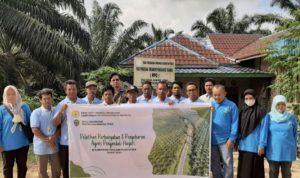
Head of the Plantation Plant Protection Development UPTD (P2TP) of East Kalimantan Disbun Sopian explained to farmers in Karang Jenawi Village, Sepaku Subdistrict, North Penajam Paser, Sunday (6/11), the use of biological control agents by utilizing living creatures around the plantation.
He revealed that a number of animals, such as parasitoid predators, insect pathogens, plant pathogen antagonists can be used to control plantation plant pest organisms.
Baca Juga:Tebing Tinggi Police Arrest State-Owned Company Employee for Using MethamphetamineCity Government Provides Nutritional Intake for 9 Month Old Toddler
“Currently, there are still many farmers who use synthetic pesticides to control plant pest organisms,” said Sopian when giving training to farmers in Penajam Paser Utara.
Read more: Tebing Tinggi Police Arrest State-Owned Company Employee for Using Methamphetamine
In fact, said Sopian, the use of these chemicals not only costs a lot of money, but also causes several unfavorable problems, including resistance to plants and environmental pollution.
“We suggest farmers to be wiser in controlling pests by using natural enemies or biological agents, because it is cheap but does not have an impact on the land,” said Sopian.
He explained that biological control agents are organisms that can be used to control pests and plant diseases.
“In this training, we train farmers to multiply Trichoderma biological control agents or fungi used as fungicides,” he also said.
He explained that Trichoderma is one of the biological agents that is routinely used to control plant pest organisms either as Trichocompost or starter application by spraying or sprinkling on plants.
Baca Juga:Baguna PDIP Holds Free Medical Treatment to Commemorate Bung Karno’s BirthdayVICE Media Anak Muda Bangkrut, Hutang Melejit!
The increasing interest of farmers in using biological control agents will reduce the negative impact of using synthetic chemicals.
“Of course, this program leads to the creation of a healthy and more environmentally friendly agricultural cultivation system and the maintenance of a sustainable agricultural ecosystem,” Sofian said again.